

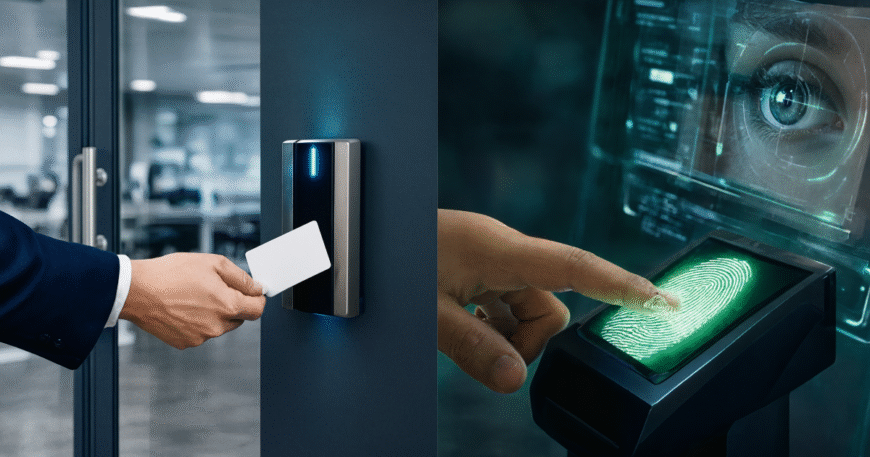
Security worries grow for today’s companies – strangers sneaking in, workers misusing logins, time records full of gaps. When offices spread out and go digital, old metal keys can’t guard what matters anymore: secrets, gear, people inside.
Out here in Dubai and the UAE, companies are turning to smarter ways of keeping spaces secure – ways that bring more oversight, easier handling, not just locks and keys. One shift? Moving toward methods like RFID or biometrics when deciding who gets through a door. These tools aren’t just about blocking entry; they shape how smoothly people move while staying safe. Each option carries its own rhythm – one reads signals from cards, the other checks body traits – to match different needs.
Understanding RFID vs Biometric Access Control Systems
A signal jumps between an RFID tag and a reader when someone nears a locked entry. That person holds out a badge instead of turning a key. The machine checks identity through invisible waves before allowing passage. Unlocking happens only after confirmation matches stored data. Access stays limited to those carrying approved tokens.
Built around physical traits like fingerprints or face shape, one kind of entry system tells who someone is without needing keys or codes. Because no two people share the exact same iris pattern or fingertip ridges, confirming identity becomes far more precise than older methods.
Starting off, RFID setups usually come with tags that talk to a reader through radio waves. Along that signal path, those readers connect to control units that manage who gets in. Software steps in next, keeping track of entries using digital logs and settings. On another note, biometrics rely on devices like fingerprint or face scanners instead of cards. These tools pair up with smart programs checking personal traits closely.
RFID Access Control System Advantages for Businesses
Because it costs little, works fast, and leaves setup simple – this kind of tech shows up often where entry needs managing.
Quick Easy Access
Cost-Effective Solution
Easy Access Management
Scalable and Versatile
Attendance Integration
Biometric Access Control System Benefits for Enhanced Security

Fingerprints or facial scans help some companies lock down access tighter than keys ever could.
✔ Higher Security
One person’s biological traits differ from another’s, so copying them proves tough.
✔ No Need for Access Cards
Built into the body, traits like fingerprints mean companies skip the hassle of forgotten badges.
✔ Accurate Attendance Tracking
Fingerprints stop coworkers from clocking in for each other, so companies keep correct work logs.
✔ Contactless Smart Authentication
Faces get recognized quickly now through smart systems that skip the need for keys or cards.
RFID vs Biometric Access Control Systems – Key Differences
Looking at RFID alongside biometric access systems means weighing a few key points.
Security: Cards using radio signals might travel between people, go missing, or get copied without permission.
Cost: Usually, RFID setups cost less to install, so they work well for companies watching their spending.
Maintenance: Every now and then, RFID setups need cards checked or replaced. Biometric ones demand fresh software now and then, along with scanner upkeep.
Speed and Convenience: Speedy scans happen instantly with RFID checks during busy times. Fast clearance comes through radio signals that confirm identity without delays.
Scalability: Scaling up RFID setups tends to go more smoothly when managing big teams, whereas setting up biometrics can get pricier.
Employee Experience: For some workers, knowing how RFID cards work makes them a go-to choice; meanwhile, different people find value in alternatives that feel new yet straightforward
Long-Term ROI: Even so, setting up biometric systems usually costs more at first, yet they might save money later.
Stable Performance When Demand Is Highest: Folks pushing these setups hard will see solid results either way, yet RFID handles big crowds at once without breaking stride.
Can Businesses Combine RFID and Biometric Systems?
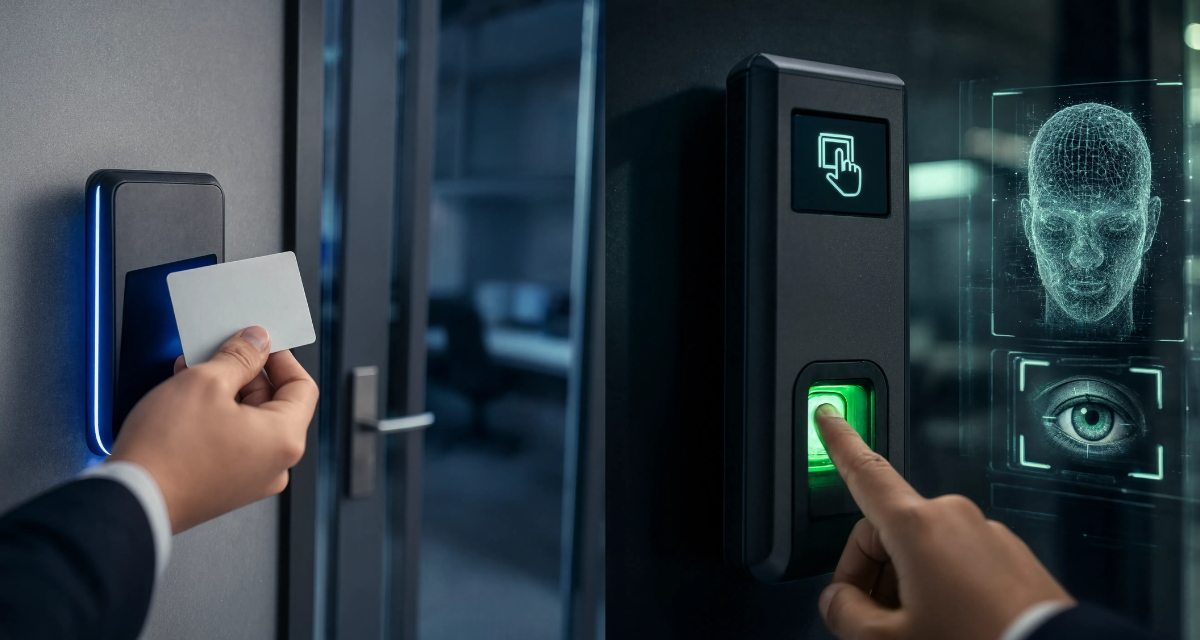
Dual-Layer Security
Enhanced Protection
Ideal for High Security Facilities
More Convenient More Controlled
Best Access Control System for Business Based on Industry Needs
For small companies, RFID systems can make a difference – costs stay low, handling stays simple, yet growth fits right in.
When companies manage confidential data or essential systems, they might use fingerprint scans because stronger protection becomes necessary. A business running key operations could adopt face recognition since safety rules demand it. Firms guarding private details sometimes turn to voice checks due to strict requirements. Handling vital services often leads to using hand geometry as risks grow. Some groups choose eye scanning when protecting delicate records matters most.
Why Professional Installation Matters
Proper System Configuration: A properly set-up system works without hiccups when experts handle the job.
Seamless Security Integration: Security setups might link up with surveillance cameras when specialists connect them.
Ongoing Maintenance and Support: Fixing things early keeps everything running longer. When updates happen on time, problems show up less often.
Compliance and Scalability: Out of sight, these services stick strictly to UAE safety rules. Growing alongside companies, they shift smoothly when needs change.
Future Trends in Access Control Technology
AI-Powered Authentication
Cloud-Based Access Management
Mobile and touchless access
Smart Building Integration
Conclusion
Eventually, RFID along with biometric methods brings useful advantages to today’s companies. Cost savings, room to grow, plus smooth entry handling come through RFID setups. Higher safety, better proof of who someone is, and tighter tracking of check-ins show up with biometrics instead.
Most of the time, what works hinges on how big your team is, what you need day to day, and how tight funds run. A mix of both systems often hits the sweet spot when weighing ease against safety. Security goals shape which path makes sense in the long haul. Talking through options with someone who has done this before clears up confusion about scaling ahead.

